

Climate at Lake Prespa – Sun, Warm Summers and Fresh Air
Continental climate with a Mediterranean touch
The Prespa valley has a continental climate with a clear Mediterranean influence. The north side of the lake has a mild continental climate. The far east and south-east feel the Mediterranean most. The large mass of lake water warms up and cools down slowly, and this softens the climate of the whole valley.
The region is often divided into two parts. Upper (Great) Prespa has a more continental climate. Lower (Small) Prespa has a more Mediterranean climate.
Key figures
| Value | |
|---|---|
| Average year temperature | 10.2 °C |
| Warmest month | July, 21 °C on average |
| Coldest month | January, 0.3 °C on average |
| Highest temperature recorded | +37.0 °C |
| Lowest temperature recorded | −26.5 °C |
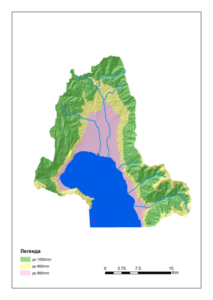
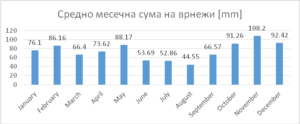
| Rain and snow per year | 730 mm |
| Sunshine | 1,400 to 2,600 hours a year |
| Average humidity | 74% |
Seasons
- Summer: warm and sunny. July and August can pass with no rain at all.
- Autumn to spring: most rain falls from November to May (sometimes June).
- Winter: snow usually falls from late November to late March.
- Fog is rare, because the wind often blows and the lake is large.
Winds
Local winds come from the lake. The most common are the north wind and the east wind. During the day the wind blows from the land to the lake, and at other times from the lake to the land. Locally the winds have names: Strmec, Denik and Bezimen.
A changing climate
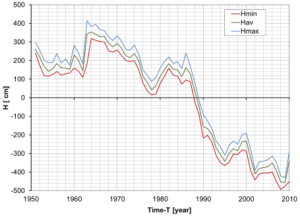
Studies show that the climate in the Prespa basin is changing. Higher temperatures and more evaporation can change the water balance of the lake in the future.
Measuring stations
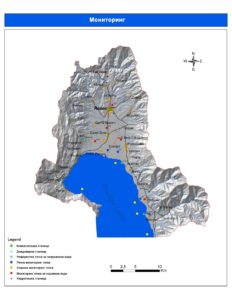
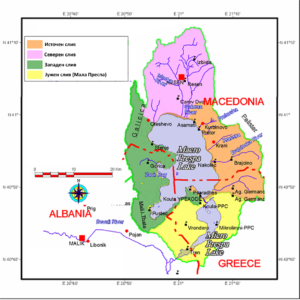
The monitoring network has a climate station in Resen, a weather station in Pretor and seven rain-measuring stations: Stenje, Carev Dvor, Perovo, Asamati, Nakolec, Izbishta and Brajchino. Lake gauges were set up in Stenje (1935), Asamati (1948) and Nakolec (1954).
Pack for the season. Plan your visit to enjoy Prespa at any time of the year.